
Stay Updated with our newsletter
4.000+ subscribers
Whether you are a journalist, institution, or funder, get our monthly roundup of news, insights, and events related to the work of Europe MédiaLab.


Newsletter #6
Dear friends,
After a good summer break, we started strongly with Rebuild2 in Helsinki. The growing number of European alternatives is clear, but the challenge is as M. Vestager explains: “We don’t have time for organic growth”. We need to connect its players now and help them scale. In Paris on Rebuild3, a scoping study of the market will be presented to give some concrete and practical figures and favour investment. End November, we will announce the first platforms to receive the Trusted European Platforms (TEPs) label. Much more to read in this edition about the momentum.
Meanwhile, the news media Euractiv is entering a new chapter. On Tuesday, 9 September, it unveils its new name and logo. Its founder, Christophe Leclercq, shares on LinkedIn: first his questions, then on Wednesday his reactions & next steps.
In this issue:
The first of the TEPs award announcements is approaching. The work to build Europe’s social media ecosystem continues.
Warm regards,
The Europe MédiaLab’s Team
| Christophe Leclercq fondateur@europemedialab.eu | Aleks Vangjelofski teps@europemedialab.eu |
| Thierry Leroy secgen@europemedialab.eu | Mélie Carcenac communication@europemedialab.eu |
At Rebuild2, founders, investors, designers, policymakers and civil society came together around a shared question: how can Europe move faster, and move together, to build a connected and trusted social media ecosystem that can scale?
Europe has the technology to do it. Across two days of workshops and conversations, it became clear that many builders are already working on different pieces of the same puzzle: from interoperability and trusted platforms to investment, partnerships and new ways of connecting users and platforms. The challenge now is to connect these efforts and help them reach scale.

As Margrethe Vestager put it in her opening remarks: “We don’t have time for organic growth.”
The work continues. If you are building, investing in, or researching Europe’s social media future, we hope to see you at Rebuild3 in Paris on Dec 13-15. And there is another milestone ahead: Stars4Media Day on 12 January 2026. We will announce the first platforms to receive the Trusted European Platforms (TEPs) label, recognising platforms that meet European standards for trust and transparency.

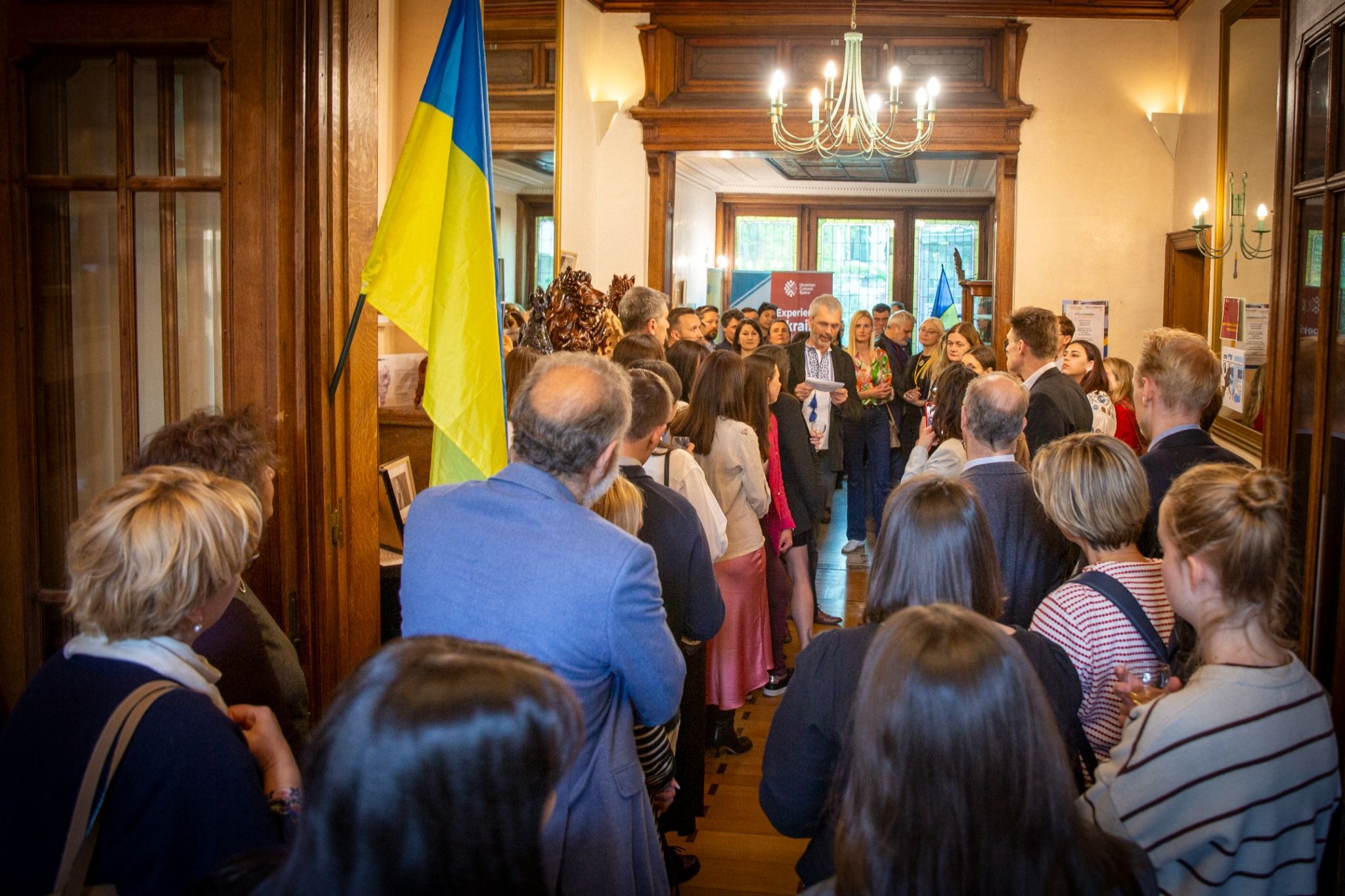
On 9 September 2026, Europe MédiaLab’s Garden Party, organised with Enabel, brought together the people shaping Europe’s information space: EU journalists, current and former Maison du MédiaLab residents, diplomats, policymakers, but also social media founders and European tech voices. After opening statements on media and the Maison du MédiaLab programme, the evening heard from Enabel CEO Jean Van Wetter, European Parliament Vice-President Victor Negrescu, Alberto Fernández-Díez from Commissioner Kos’ Cabinet, H.E. Ambassador of Armenia to the EU Tigran Balayan, and Moldova’s Minister-Counsellor to the EU Angelica Munteanu. The conversation then turned to Trusted European Platforms, with Christophe Leclercq, Grégoire Vigroux, Clare Melford and Luc Suykens sharing perspectives on the platforms and initiatives building trust in Europe’s information space.
Luk Suykens, chair of the Belgian and World Advertising Associations, brought the advertisers’ perspective: “We advertisers fund these global platforms. Yet we want a safe environment for our brands. That’s where both our projects come together.”
Earlier this month in Brussels, some social media builders came together around one central question: How do we build a digital ecosystem defined by trust, sovereignty, and genuine human connection?

In the picture, from left to right, Christophe Leclercq (Europe MédiaLab), Mats Pellback-Scharp (W Social), Aleks Vangjelofski (Europe MédiaLab), Grégoire Vigroux (eYou Social), Gilles Vanderpooten (Reporters d’Espoirs) and Sebastian Wilke (wedium).
Something bigger is assembling behind the scenes. From upcoming autumn gatherings in London and Paris to major ecosystem milestones early next year, European media platforms are preparing to show what happens when innovation meets shared values.
Rebuild 3, Paris | 13–15 December 2026: Bringing together the people shaping the future of European social media.

European social media exist, yet this year’s State of the Union speech did not mention them once.
President Ursula von der Leyen was re-elected on the promise of a Democracy Shield. Although the Shield refers to European platforms, it contains no concrete action to support them. Shielding children from addictive algorithms is welcome, but it is only half the job. Adults will keep using foreign networks full of bots and disinformation unless they have a real alternative. Regulating Silicon Valley does not by itself give Europe strategic autonomy.
The builders are already here: some 200 founders gathered at Rebuild in Helsinki this August, ready to scale, make their services work together, and partner with newsrooms and advertisers. What they need is private investment now, not public funds that may arrive years from now through the next MFF or AgoraEU. With the 2029 European elections approaching faster than Brussels seems to think, Europe MédiaLab and its partners will award a “Trusted European Platforms” label to the most promising, trusted European social media, and anyone can help today by following and joining them.
Discover: W Social, wedium, eYou, Monnett, mu.social, Jodel, nebenan.de, Mastodon and many more (stay tuned)!
A new scoping study explores the commercial feasibility and growth potential of Trusted European Platforms (TEPs). It is looking at what it would take for European social platforms to scale. Triggered by Europe MediaLab, the study examines the size of the market opportunity, including quantification of how much advertising spending could be directed towards European social media platforms (in billions).
It will also investigate the funding and resources needed to grow platforms from 0 to 1 million users, a key challenge to scalability. Moreover, the study’s dissemination should raise the visibility of Europe’s emerging social media ecosystem and strengthen its position among policymakers, investors and industry leaders. In other words, this study shows the institutional interest towards the growing European social media industry.

Social media is quietly rewriting the rules of our political debate. Our colleague Aleks Vangjelofski spoke at the ProVote event: “Democracy and Social Media in Europe: Sovereignty, Disinformation and Polarisation” where he highlighted Europe’s social media landscape and the need for credible European alternatives both at European and local level. He drew attention to the growing number of platforms built in Europe, including eYou Social experimenting with fact-checking, and wedium making safe social space for kids. He also introduced the Trusted European Platforms (TEPs) programme. Interoperability grabbed participants’ attention. It allows people to move their identity, content and connections between platforms rather than being locked into one. Aleks pointed out that European platforms need political support and long-term investment to grow. Political and social awareness would provide support for European social media platforms with their main issue: lack of investment and interest from investors. The industry is growing, but still young, and capital is required to take things to the next level and allow the platforms to scale.

Last Friday, Christophe Leclercq joined a panel at La Gaîté Lyrique in Paris, as part of Antitrust: le festival pour résister aux monopoles. His message: regulating is not enough. Europe must also build its own alternatives. With 54% of Europeans using social media as their first source of news, and news media capturing only a fraction of digital advertising revenues, the challenge goes beyond ownership of traditional media. It is about who controls the platforms, audiences and revenues shaping Europe’s information space. Christophe argued for a genuinely European industrial strategy, bringing independent news media and ethical startups together with emerging European social platforms.
The opportunity is taking shape: Rebuild brings together hundreds of European social media builders, while Europe MédiaLab’s Trusted European Platforms (TEPs) label aims to help promising platforms grow. How can Europe turn this momentum into a more balanced, pluralistic and sovereign media ecosystem?
With Dr. Courtney Radsch , Fabrice Février , Romain Laleix and Sophie Taillé-Polian . Moderated by Eros Sana .

Meta’s $17.1 billion US settlement marks a landmark moment for social media regulation, and its limits. Following a trial brought by US states, Meta agreed to time limits for teenagers, nighttime restrictions, stronger age checks and independent oversight. Meta denies wrongdoing, and the settlement still requires court approval. Read the details of the US settlement
The debate goes beyond the payment. Senator Amy Klobuchar put it simply: “It’s not the parents. It’s the products.” Imran Ahmed of the Center for Countering Digital Hate noted that $17 billion over ten years is less than 1% of Meta’s annual revenue. The real question is whether regulation can change platforms whose business models and incentives were built elsewhere.
For Europe, the EU’s Digital Services Act provides powerful tools. The Commission expects Meta to offer European children protections at least as strong as those agreed in the US. Amnesty’s Hannah Storey notes that “in the EU, litigation at this scale may not be necessary.” Yet Europe still regulates infrastructure it does not own. Regulation alone cannot deliver digital sovereignty. Europe needs its own trusted, interoperable social media that can compete at scale and give users a genuine choice.
The policy media Euractiv has officially become Rapporteur. What does that mean, and what comes next? In a new video, Christophe Leclercq, Euractiv’s founder, reflects on the change after 25 years of journalism, 12 languages and a network spanning 12 European capitals.
His take on Rapporteur is measured: the new publication may be “good for subscribers”, and strong independent journalism in Brussels is certainly valuable, particularly if it improves the quality of European policy debate. But for Christophe, the bigger question lies elsewhere. If he were starting a media venture today, he would look beyond the traditional Brussels model, towards national press and the rapidly changing world of social media.
That is where Europe MédiaLab is focusing its efforts: supporting independent journalism through the Maison du MédiaLab, and helping build a new European social media ecosystem through Trusted European Platforms. Meanwhile, the wider (former) Euractiv family continues to evolve, with former team members pursuing innovative projects and country partners moving forward under their own brands. The yellow suit may be an icon in history, but building Europe’s next media ecosystem is the future.
