
Stay Updated with our newsletter
4.000+ subscribers
Whether you are a journalist, institution, or funder, get our monthly roundup of news, insights, and events related to the work of Europe MédiaLab.
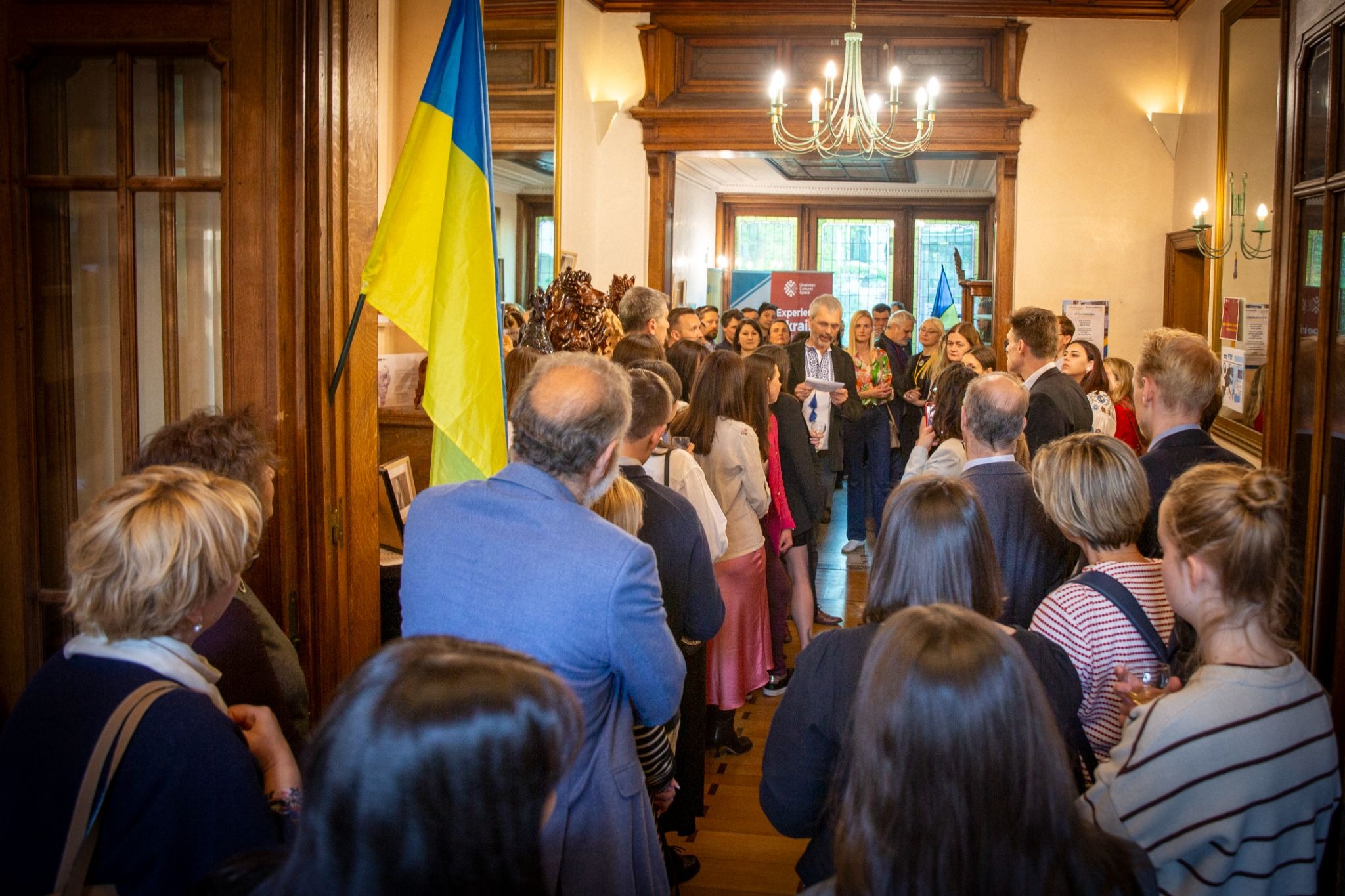

On July 15, Europe MédiaLab organised a welcoming reception for the new wave of EU correspondents taking part in the Maison du MediaLab programme.
Journalists from Armenia (Hetq and Factor), Georgia (Tabula), Moldova (IPN and NordNews), and Ukraine (Babel) arrived in Brussels in early July. At their first networking event in Brussels, they were welcomed by Angelica Munteanu, Minister-Counsellor at the Mission of Moldova to the EU, before the six new resident journalists were officially introduced to the Brussels community by Europe MediaLab’s team.


The reception gave the newly arrived journalists a chance to meet Brussels press corps colleagues and connect with officials and press officers from EU institutions, Member State representations, and partner countries’ missions, and unfolded into an evening of lively conversation in the Maison’s garden.
The next chance to get to know the newly arrived journalists will be at the Stars4Media Garden Party, which will take place on Wednesday, the 9th of September, from 18:00 to 21:00, at the Maison du MediaLab (Avenue de l’Yser 34).
Independent journalism and trustworthy digital platforms are the two infrastructures democracy depends on. Europe MédiaLab works on both of them via Maison du MediaLab and the Trusted European Platforms label, promoting a European digital space free from foreign manipulation. Join us by registering via this registration form.

The fourth wave’s first weeks in Brussels have been packed with events and study visits, even as the pace slows with officials departing for summer holidays.

On the institutional side, the EEAS’s StratCom team welcomed the group to compare notes on combatting FIMI and malign influence and discuss the EU’s related initiatives.
Visits to the Mission of Norway to the EU and Sweden’s Permanent Representation gave the journalists a clearer picture of Scandinavian policy toward the EU and Eastern European countries. The group also met with diplomats from the Czech, Lithuanian, and Polish Permanent Representations and discussed the EU and Member States’ enlargement and Eastern Europe policies in greater depth.
The visits also offered insights into what the work of Permanent Representations’ spokespersons entails and how journalists can use it during their professional stays in Brussels.


The journalists also visited the Council of Europe’s liaison office to the EU, as well as their respective countries’ Missions to the EU, where they met with Ambassadors and diplomats. Now the journalists head home and will return in September to put their newly gained insights to use, just as the Brussels bubble picks up speed again!


Our newly arrived correspondents have spent their first weeks getting acquainted with life as accredited journalists in Brussels.
Equipped with their EU inter-institutional press accreditations, they were given guided tours by the audiovisual units of the Council of the EU and the European Parliament, gaining a first-hand look at the broadcasting facilities and press working premises available to them for their day-to-day reporting.
Beyond the institutional introductions, the correspondents also had a chance to learn about journalistic work in Brussels from established EU-focused media outlets, meeting with Nick Vinocur at Politico, Sasha Vakulina at Euronews, and Alex Cadier from TVP World.
To wrap up a busy induction period, the correspondents had their first meetings with mentors, allowing them to hear different perspectives about the system of the EU’s decision-making.

The 14th of July marked the opening of accession negotiations between the EU and Ukraine and Moldova on external relations policies, the 6th negotiating cluster, just one month after the first cluster of negotiations was opened. This allowed our journalists not only to report on another significant milestone in their countries’ accession processes, but also to meet and interview the Moldovan Deputy Prime Minister for European Integration, Cristina Gherasimov, and the Deputy Prime Minister and Acting Minister of Foreign Affairs, Mihai Popșoi.
Later that week, the European Parliament turned its attention to Armenia. It hosted an event titled “Armenian Political Prisoners in Azerbaijan and the Imperative of EU Engagement,” giving our Armenian journalists the opportunity to engage with MEPs, legal experts, human rights advocates, and family members of Armenian detainees on the continued detention of Armenian prisoners of war by Azerbaijani authorities. The Parliament’s International Trade Committee also approved a proposal to exempt roughly 80% of Armenian exports to the EU from customs duties, a measure aimed at helping Armenia withstand growing economic pressure from Russia.
Karine Asatryan Factor (Armenia) | Cătălin Volconovici NordNews (Moldova) |
 Shortly after she arrived in Brussels, Karine Asatryan covered the European Parliament’s event on Armenian POWs in Azerbaijan as well as the INTA Committee’s discussion regarding temporary trade-liberalisation measures applicable to Armenian products. She also covered the Commission’s 890 million euro Google fine following its non-compliance with the DMA. |  During the first month of his stay, Cătălin Volconovici reported on the opening of the sixth cluster of accession negotiations between the EU and Moldova. His report was accompanied by an interview, which he conducted with the Moldovan Deputy Prime Minister for European Integration, Cristina Gherasimov. |
 Samson Martirosyan
  Yuliia Hyra
  Maxim Bolohan
  Giorgi Edilashvili

