
Stay Updated with our newsletter
4.000+ subscribers
Whether you are a journalist, institution, or funder, get our monthly roundup of news, insights, and events related to the work of Europe MédiaLab.
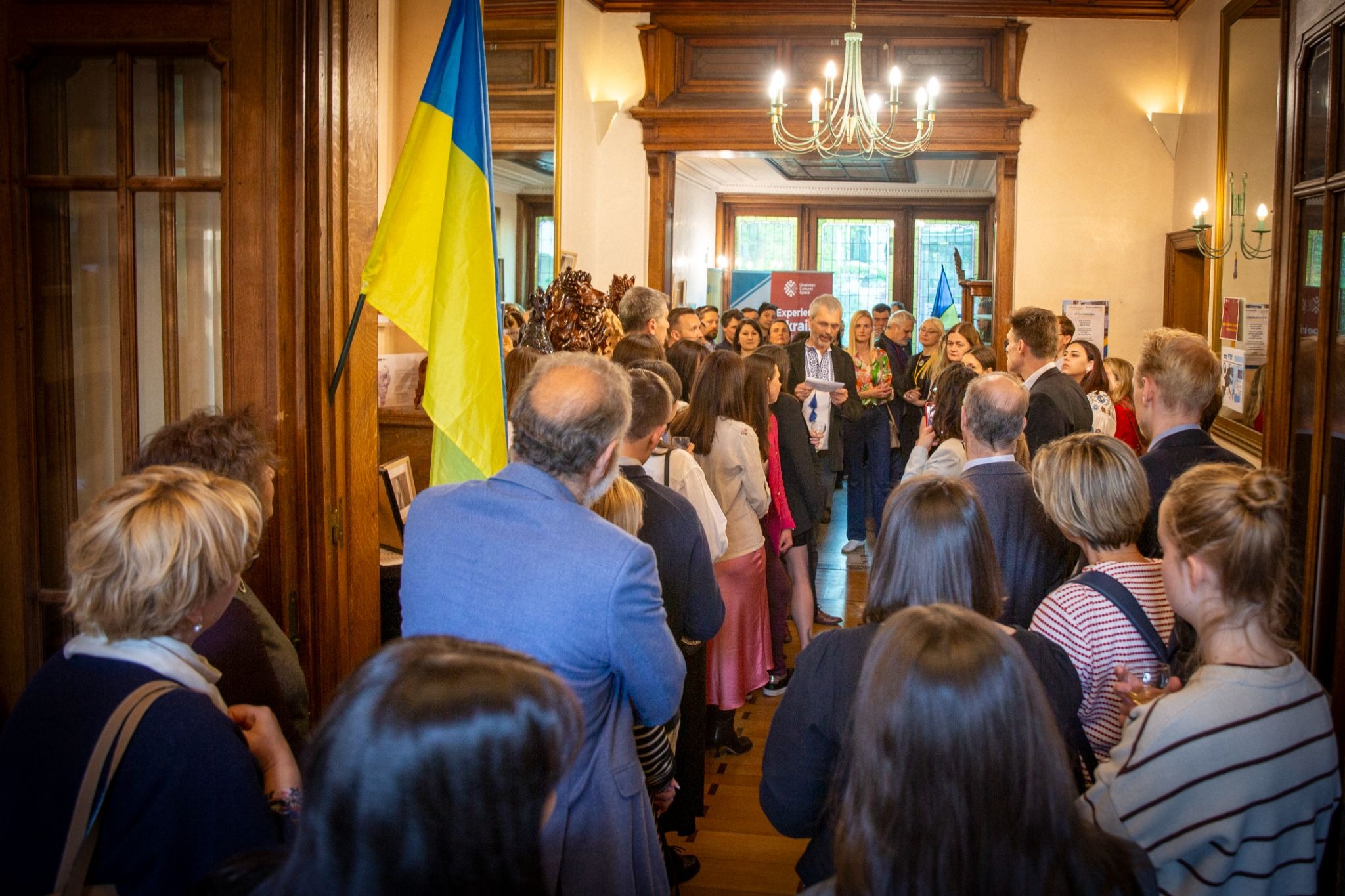


On June 11, Europe MédiaLab hosted an event in collaboration with Promote Georgia, focusing on Georgia’s European future ahead of the upcoming European Parliament vote on the 2025 Georgia report.
MEP Markéta Gregorová (Greens/EFA), Vice-chair of the EP’s delegation to the EuroNest Parliamentary Assembly and a long-time Georgia advocate, and Tinatin Akhvlediani, Head of the Enlargement Programme at CEPS, delivered opening remarks on the state of Georgia-EU relations.


«You see the country with the highest aspirations in the region falling to the depths of what is now being compared to Belarus and Russia. (…) I’m very happy that Georgia and other EaP countries are staying on the radar of the EU,» said MEP Markéta Gregorová.
A lively debate followed, with a further contribution from Tamara Nutsubidze, founder of the media platform Euroscope, and Nino Chichua, Brussels correspondent of Netgazeti and Maison du MédiaLab resident.
The week of 15 June was one of the busiest of the year for the Maison’s resident correspondents, as enlargement dominated the EU agenda across three cities. From the first negotiating cluster opening for Ukraine and Moldova in Luxembourg, to the European Parliament’s 2025 Georgia report in Strasbourg, to the European Council in Brussels, here is how our correspondents covered the week for their home audiences.
The week started in Luxembourg, where Ukraine and Moldova each reached a significant milestone with the opening of negotiations on the first, so-called ‘fundamentals’ cluster. To cover this step in their respective countries’ accession processes, Tetiana Litvinova and Carina Muller were both on the ground in Luxembourg gathering first-hand material.


The week also marked the start of the European Parliament’s June Plenary Session in Strasbourg. On 17 June, MEPs voted on the 2025 report on Georgia, which highlights the country’s democratic backsliding and calls for EU-wide targeted sanctions. Nino Chichua, Brussels correspondent of Netgazeti – of which the imprisoned Mzia Amaglobeli is co-founder and editor – gathered information directly from the Parliament’s hallways in Strasbourg.
Finally, 18–19 June brought European leaders to Brussels, where the European Council adopted conclusions on Ukraine, enlargement and reforms, and the Republic of Moldova, among other topics. The Council also announced a strategic discussion on enlargement and reforms, prompted by the recent positive developments in ongoing accession processes, to be held at the next European Council in October 2026. Tetiana Litvinova and Carina Muller covered this meeting from the European Council’s building in Brussels.

On 4-6 June, Europe MédiaLab, along with partner media outlets, was present at the Unlock-2026 conference “From Reaction to Action” of the Prague Civil Society Centre in Prague, Czech Republic, to hear from civil society and media outlets about resilience in Eastern Europe and to share Europe MédiaLab’s experience in supporting independent media from Armenia, Georgia, Moldova, and Ukraine.
Dozens of keynote speeches and workshops, 300 activists, journalists, content creators, and tech innovators from 30 countries across Eastern Europe, the Caucasus, and Central Asia exchanged on how to move from defensive responses to taking back the initiative and proving that positive change, no matter how hard the conditions. Exactly what Maison du MediaLab is about, to push for change under pressure.


The second EU-Moldova summit took place on Monday, 22 June, and our correspondents were on the ground as António Costa and Ursula von der Leyen welcomed Maia Sandu, President of the Republic of Moldova, to Brussels. Coming just after the opening of the first negotiation cluster on 15 June, the summit was a chance to set out the next steps and priorities in the accession process for both the EU and Moldova.
The high-level officials received questions from Carina Muller, TVR Moldova’s correspondent and Maison du MediaLab resident, and former residents Iulia Sarivan, TVP World, Elena Zagnat, Agora, Valeriia Pashko, Suspilne, and Tetyana Vysotska, European Pravda.

As the third wave of correspondents wraps up their time in Brussels, the Maison du MédiaLab is preparing for the next chapter – the arrival of six new Eastern European correspondents in Brussels. During the first week of July, the house will welcome Armenian journalists from Hetq and Factor, a Ukrainian correspondent from Babel, Moldovan reporters from IPN and NordNews, and a Tabula journalist from Georgia. Plane tickets are booked, and accreditation processes are underway. Europe MédiaLab is working to ensure its stay in Brussels offers plenty of insights and professional connections.
Carina Muller
(Moldova)

Carina Muller filmed an exclusive video interview with Enlargement Commissioner Marta Kos ahead of her travel to Moldova – a first for Maison du MédiaLab, marking the programme’s highest-profile interview to date. She also covered the EU-Moldova summit directly from Brussels.
Tetiana Litvinova
(Ukraine)

This month, Tetiana Litvinova covered what the opening of negotiation clusters with the EU means for Ukraine – and why the most difficult part is yet to come. Following the European Council summit, she reported that the final conclusions dropped the phrase “as soon as possible” from their commitment to opening further negotiation clusters.


